


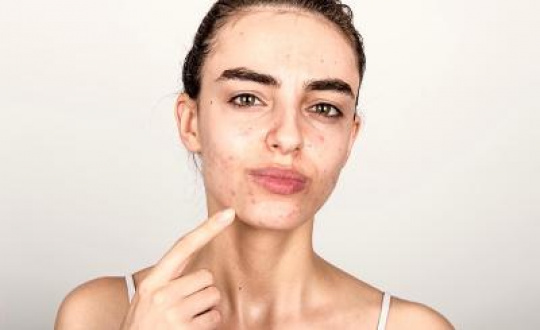
Acne scars
Acne scars
The unsightly lines remaining after treatment are difficult to remove. Acne scars usually occur when acne is accompanied by inflammation and purulent lesions, which unfortunately promote abnormal skin healing, and when the damage is very deep. Acne scars are usually atrophic scars, which appear as small, crater-like pits. They appear as a result of serious damage to the deeper layers of the dermis, the subsequent regeneration of which has not proceeded properly by replacing it with fragments of fibrous connective tissue in the form of visible pits of irregular shape and various sizes. Unfortunately, with age, the loss may deepen, which is caused by a decrease in the amount of collagen responsible for skin firmness and elasticity.
Effective methods of removing acne scars
- Platelet-rich plasma
Also, treatments with platelet-rich plasma are used in the treatment of scars and discoloration after acne. We obtain platelet-rich plasma from the patient's own blood. After blood is collected in specially designed test tubes, the blood is centrifuged, thanks to which the fraction of plasma rich in platelets is separated. After administration by needle mesotherapy, cytokines and growth factors contained in the plates are released and strongly stimulate the cells to produce collagen, elastin and hyaluronic acid. As a result, acne scars are smoothed and the skin tone is evened out - removing acne discoloration.
- CO2 fractional laser
A surprisingly effective method of fighting acne scars is the use of a fractional laser. The essence of its operation is the use of fraxel technology, the production of thousands of microscopic holes in the treated area, invisible to the naked eye, surrounded by healthy, undamaged skin. This stimulates the processes of new tissue formation while creating new collagen fibers which "push" existing scars upwards, smoothing and smoothing the skin surface. The use of a fractional laser raises "valleys" upwards, flattening and smoothing the skin surface. Noticeable effects are visible after the first treatment, but in order to achieve the expected and lasting results, they usually need to be carried out from four to six with an interval of at least a month.
- Microneedle Fractional Radiofrequency (RF)
Micro-needle radiofrequency - thermolifting, is a method used in aesthetic medicine to increase skin tension and remove scars (especially acne scars). The treatment involves simultaneous puncturing of the skin with micro-needles and heating with electromagnetic radiation. Radiofrequency is the effect of radio frequency electromagnetic wave on the skin, which by heating the tissue stimulates its regeneration. The heat causes the collagen fibers to contract and induces the processes of creating new collagen. Microneedling, in turn, acts on the skin with micro-needles, which mechanically damage the tissue and stimulate its regeneration.
There are three types of acne scars:
- Atrophic scars: These scars appear as small indentations in the skin. They occur when the skin does not make enough fibroblasts in the healing process. Fibroblasts are cells that play a crucial role in wound healing and the synthesis of collagen.
-
- Hypertrophic scars: These occur when the skin makes too many fibroblasts as the acne spot heals, causing a raised scar.
-
- Keloid scars: These are similar to hypertrophic scars but are typically much thicker than the original acne spot. They are usually darker than the surrounding skin and can be red or brown. Keloid scars may also cause symptoms, such as itchiness or pain
Suitable treatment options may vary slightly depending on the type of scarring that acne has caused.
How to take care of acne skin?
Frequent, incompetent cleansing of acne-prone skin may lead to its dryness and, as a consequence, increased work of sebaceous glands and clogging of pores. Therefore, you must not forget about proper skin hydration. Mild cosmetics that contain aloe vera can help. Blackheads or pustules developing on the face must not be scratched or squeezed, as this leads to tissue damage and bacterial infection. You can also take care of your skin by changing your eating habits, enriching your diet with products containing vitamins (A, E, C) and antioxidants. Keeping spicy food to a minimum is good for your skin. Spicy spices overproduce sebum and cause inflammation.