


Alopecia and hair loss
Hair loss (alopecia)
Hair loss may only affect your scalp or your entire body, and may be temporary or permanent. It can be the result of heredity, hormonal changes, medical conditions, or the normal aging process. Anyone can lose head hair, but it's more common in men.
Alopecia usually refers to excessive hair loss on the scalp. Hereditary hair loss with age is the most common cause of baldness. Some people prefer their hair loss to go without treatment and without hiding it. Others may cover it up with hairstyles, makeup, hats, or scarves. And still others choose one of the treatments available to prevent further hair loss or restore growth.
People typically lose 50 to 100 hairs a day. This is usually not noticeable as new hair grows at the same time. Hair loss occurs when new hair does not replace the hair that has fallen out.
Hair loss can be a consequence of various conditions, and alopecia can be broadly divided into two types:
- primary - male pattern baldness and alopecia areata;
- secondary - resulting from, for example, nutritional deficiencies, poisoning or various diseases, e.g. seborrheic alopecia.
Hair loss is usually associated with one or more of the following factors:
- Family history (heredity). The most common cause of hair loss is an inherited disease that appears with age. This condition is called androgenetic alopecia, male pattern baldness, and female pattern baldness. It usually occurs gradually and in predictable patterns - receding hairline and bald patches in men, and thinning hair on top of the head in women.
- Hormonal changes and diseases. Permanent or temporary hair loss can cause a number of health conditions, including hormonal changes caused by pregnancy, childbirth, menopause, and thyroid problems. Diseases include alopecia which is related to the immune system and causes uneven hair loss, scalp infections such as ringworm.
- Drugs and Supplements. Hair loss can be a side effect of certain medications, such as those used to treat cancer, arthritis, depression, heart problems, gout and high blood pressure.
- Head radiation therapy. Hair may not regrow as much as it did before.
- A very stressful event. Many people experience general hair thinning months after a physical or emotional shock. This type of hair loss is temporary.
- Hairstyles and treatments. Excessive hairstyles or hairstyles that pull the hair hard, such as braids or pigtails, can cause hair loss called traction alopecia. Hot oil and permanent hair treatments can also cause hair loss. If scars appear, the hair loss can be permanent.
Modern treatments are effective and non-invasive at the same time. The sooner you start the treatment, the better the results you will get.
Mesotherapy
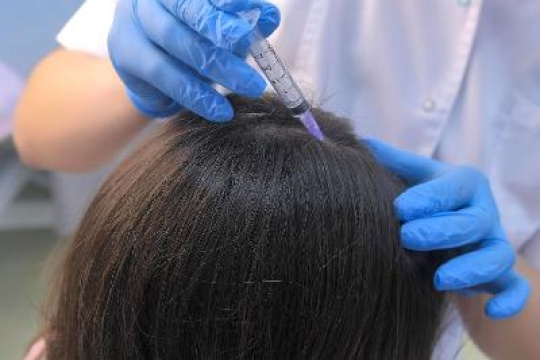
Needle mesotherapy is one of the most effective methods of treating excessive hair loss. A special cocktail of vitamins and minerals is introduced into the skin by injection. On the other hand, the micro-injuries caused during the run-off activate regenerative processes and stimulate the hair bulbs.
Currently, we use several types of substances in needle mesotherapy:
- vitamin cocktails,
- platelet-rich plasma,
- stem cells.
Hair loss may seem like a very inconspicuous problem at first - nothing could be further from the truth! By themselves, they will never fade away, and they will do so until they finally turn bald. Shampoos, conditioners and lotions for hair loss are not effective enough - there is only one good way to prevent baldness and bending - trichology.
Mesotherapy treatment prevents hair loss and accelerates hair regrowth by improving the blood supply to the scalp and renewing the hair follicles. Hair grows back stronger, thicker and thicker. The effects in the form of inhibiting hair loss are visible after the first treatment, while the thickening and regrowth of new hair takes place after subsequent treatments in the series.
Achieving long-term effects is possible after applying the recommended series of treatments from 4 to even 10 series every 2 weeks. Optimal effects are visible after two months, and to maintain them, a reminder treatment is recommended after six months.